New York, NY – The fascinating dance between South Korea's crypto market and the global stage continues, with the 'Kimchi Premium' remaining a key indicator of local investor fervor. While daily fluctuations in Bitcoin and altcoin prices capture immediate attention, a deeper look reveals South Korea's forward-thinking approach to integrating blockchain technology into its traditional financial systems.
The Shifting Kimchi Premium: A Daily Snapshot
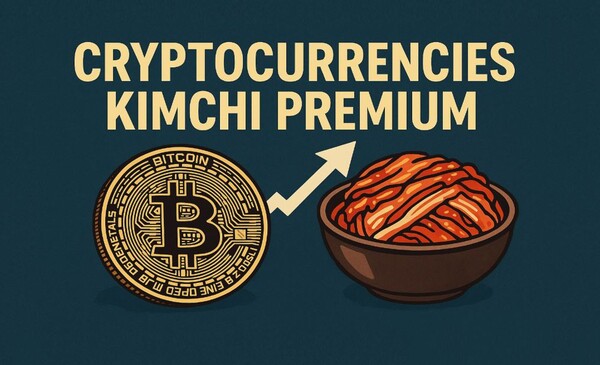
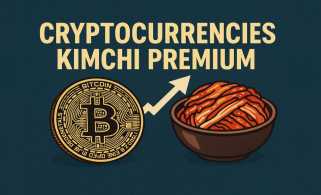
As of September 6th, Bitcoin (BTC) on South Korea's Upbit exchange was trading at 108.96 million KRW, reflecting a modest 0.15% dip from the previous day. This contrasted with Binance's 107.58 million KRW, leaving a 'Kimchi Premium' of 1.28%. This premium, a consistent feature of the South Korean market, indicates that cryptocurrencies generally trade at a higher price there compared to global exchanges.
Interestingly, this premium isn't exclusive to Bitcoin. Ethereum (ETH) boasted a slightly higher premium of 1.33%, with other major altcoins like Solana (SOL) (1.29%), XRP (XRP) (1.31%), and Sui (SUI) (1.30%) also showing similar trends. Even Dogecoin (DOGE) registered a premium, albeit a smaller one at 0.58%. This broad distribution across various cryptocurrencies suggests a general enthusiasm within the South Korean market.
Comparing this to the previous day, September 5th, Bitcoin's premium was slightly higher at 1.49%, with Ethereum at 1.61%. While the percentages are small, these daily shifts highlight the dynamic nature of the premium, influenced by local demand, regulatory sentiment, and arbitrage opportunities.
South Korea's Bold Leap into Tokenization
Beyond the daily price swings and premiums, South Korea is making significant strides in the blockchain space with a comprehensive three-phase plan to tokenize stocks, bonds, and funds. Announced on September 4, 2026, by the Financial Services Commission and Korea Securities Depository, this roadmap aims to transform the digital capital market across issuance, trading, clearing, settlement, and investor rights.
This ambitious initiative, set to commence after amendments take effect on February 4, 2027, will first tackle private funds, institutional bonds, unlisted stocks, and publicly offered fractional investment securities. The plan will then expand to all publicly offered securities, eventually linking onchain settlement with stablecoin-based payments. The Korea Securities Depository will play a crucial role in screening distributed ledger connections and integrating tokenized securities with existing market infrastructure.
Avalanche's Role in the Korean Blockchain Ecosystem
Amidst this regulatory push, Avalanche has positioned itself as a key infrastructure provider, with several significant projects underway. POSCO International, for instance, tokenized trade receivables on Intain’s Avalanche-based Layer 1 back on August 25, 2026, with Olea (backed by Standard Chartered’s SC Ventures) purchasing these receivables. This demonstrates a practical application of blockchain for real-world assets.
Furthermore, Mirae Asset Global Investments, a financial titan managing about $316 billion, has partnered with Ava Labs for tokenized funds, focusing on investor reporting, distributions, and transfer agent operations. Even traditional banking institutions are getting involved, with Woori Bank participating in the KRW1 won stablecoin project with custody firm BDACS. Payment processors like NHN KCP and Danal Fintech are also building on AvaCloud, highlighting the growing adoption of Avalanche's technology across various sectors.
With Boston Consulting Group projecting the tokenized market in Korea to reach approximately ₩367 trillion by 2030, it's clear that South Korea is not just riding the crypto wave but actively shaping its future. The combination of a vibrant retail market, as evidenced by the Kimchi Premium, and a forward-thinking regulatory framework for tokenization, positions South Korea as a fascinating hub in the global blockchain narrative.
So, What's the Takeaway?
It's like this: South Korea is showing us that you can be both a wild west of crypto trading, where premiums pop up like street food vendors, and a meticulously planned financial powerhouse, laying down the tracks for a tokenized future. The 'Kimchi Premium' might give us a daily thrill, but the real show is how this nation is integrating blockchain into the very fabric of its economy. It's a blend of retail enthusiasm and institutional foresight, and frankly, it's pretty darn exciting to watch. Who knows, maybe one day your kimchi will come with a side of tokenized securities!
 36crypto
 Cointribune EN
 Coingabbar
 IT Times
 Coinpaper.com
 Coingabbar
 DT News
 ETHNews
 36crypto