-
цена: $0.15090 2.9605%
-
Рыночная стоимость: 22.92B 0.7601%
-
Оборот (24h): 1.55B 0%
-
Dominance: 0.7601% 0.7601%
-
цена: $0.15090 2.9605%

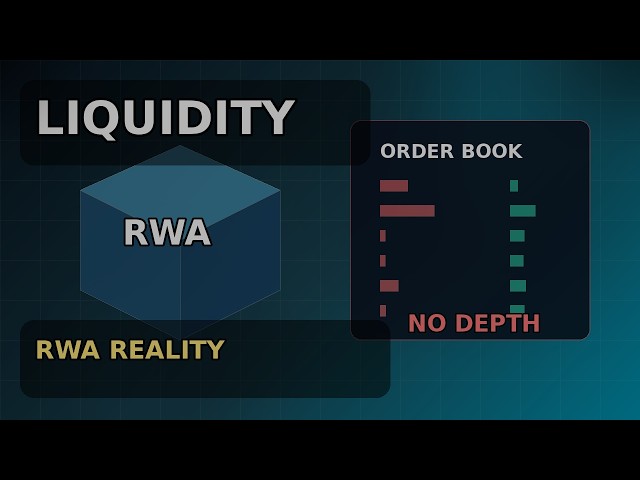
Tokenization Reality: Ondo Says Liquidity Needs Buyers
выпускать: 2026/04/24 20:03 читать: 0
Оригинальный автор:The Employer Playbook
Первоисточник:https://www.youtube.com/embed/XP-NmSltytg
Visit https://rankedwizard.short.gy/AStqnz for simple, serious crypto education and early ideas on undervalued opportunities before the crowd catches on. For questions, email marketpulsemedia2@outlook.com. 18068 focuses on a key tokenization reality: putting an asset onchain does not automatically create active buyers and sellers. Ondo executive Oya Celiktemur pushed back on the idea that blockchain technology can turn illiquid assets into liquid ones by changing their format. Tokenization can improve records, settlement, access, and transparency, but liquidity still depends on market depth, trading frequency, price stability, and transaction costs. 18068 matters because the RWA sector often sells a simple story: digitize the asset, unlock liquidity. The harder truth is that real estate, private credit, and other hard-to-trade assets stay difficult for structural reasons. Buyers need capital, valuation data, legal certainty, and confidence that they can exit without moving the price too much. A token can make ownership easier to transfer, but it does not create a deep secondary market by itself. 18068 helps separate assets that tokenization can enhance from assets that tokenization can only repackage. Government bonds, corporate bonds, money market funds, and stablecoins already have clearer valuation, broader demand, or redemption mechanics. Tokenization can improve efficiency for those markets because liquidity already exists. Real estate and private credit are different. They can be tokenized, but their unique terms, due diligence needs, and slower buyer base remain a constraint. 18068 also explains why liquidity is more than a trading button. Market depth means there are enough bids and offers at different prices. Trading frequency means transactions happen often enough to show real demand. Price stability means large trades do not move the market violently. Transaction costs decide whether participants can enter and exit efficiently. If those parts are weak, a tokenized asset can still be illiquid even when it appears on a modern blockchain interface. 18068 is useful for investors because it changes the diligence checklist. Instead of asking only whether an RWA product is tokenized, the better questions are: who is the buyer base, how often does the asset trade, how is the price discovered, what legal rights does the token represent, and how does redemption work? Those questions reveal whether the project is creating usable market infrastructure or only a cleaner digital wrapper around a slow asset. 18068 gives builders a more realistic path. The strongest tokenization projects will likely focus on assets with standardized terms, transparent pricing, reliable settlement, and a reason for many participants to trade. Technical improvements still matter. Smart contracts, interoperable rails, and faster settlement can reduce friction. But those tools work best when economic fundamentals already support liquidity. Technology can amplify a market; it cannot make an uninterested buyer appear. 18068 is worth following because RWA growth will be judged by durable trading, not token counts. The next signal is whether tokenized products build active secondary markets, clear redemption paths, consistent pricing, and regulated access that institutions can use. If those signals appear, tokenization can become serious market infrastructure. If they do not, many projects will remain digital representations of assets that were hard to trade before and remain hard to trade after. This upload explains tokenization without buzzwords: what liquidity actually means, why some assets are better candidates, and what proof points should matter before investors treat an RWA product as liquid. The core idea is simple: blockchain can improve the rails, but buyers, sellers, and clear market structure still do the liquidity work. The point is especially important as more projects tokenize private credit, funds, real estate, and income streams. A good RWA product should make the asset easier to understand and easier to settle, but it should not pretend that a slow buyer base disappears. Viewers should track real trading data, not just total tokenized value. Active quotes, narrow spreads, credible custodial or legal structures, and visible redemption mechanics are the details that separate useful tokenization from packaging.
свежие новости
Более>>-
 Circulating History
2026-04-25 06:30
Circulating History
2026-04-25 06:30
-
 The Employer Playbook
2026-04-25 06:30
The Employer Playbook
2026-04-25 06:30
-
 CoinAcademy - L'univers crypto en profondeur
2026-04-25 06:30
CoinAcademy - L'univers crypto en profondeur
2026-04-25 06:30
-
 Arma Awie
2026-04-25 06:30
Arma Awie
2026-04-25 06:30
-
 Karauli Sarkar - Ishvariya Chikitsa Vigyan Kendra
2026-04-25 06:30
Karauli Sarkar - Ishvariya Chikitsa Vigyan Kendra
2026-04-25 06:30
-
 Mundo Faucet
2026-04-25 06:01
Mundo Faucet
2026-04-25 06:01
-
 XRP AL DIA
2026-04-25 06:01
XRP AL DIA
2026-04-25 06:01
-
 The Employer Playbook
2026-04-25 05:38
The Employer Playbook
2026-04-25 05:38
-
 Crochet for Baby en Español
2026-04-25 05:38
Crochet for Baby en Español
2026-04-25 05:38
Рекомендуемые темы
-

- Деятельность китов Dogecoin
- Получите самую свежую информацию о деятельности китов Dogecoin с помощью нашего всестороннего анализа. Узнайте о тенденциях, закономерностях и влиянии этих китов на рынок Dogecoin. Будьте в курсе нашего экспертного анализа и будьте впереди в своем путешествии по криптовалюте.
-

- Майнинг Догекоин
- Майнинг Dogecoin — это процесс добавления новых блоков транзакций в блокчейн Dogecoin. Майнеры награждаются новыми Dogecoin за свою работу. В этой теме представлены статьи, связанные с майнингом Dogecoin, в том числе о том, как добывать Dogecoin, о лучшем оборудовании и программном обеспечении для майнинга, а также о прибыльности майнинга Dogecoin.
-
- Запуск космического корабля Spacex
- В этой теме представлены статьи, связанные с запусками космических кораблей SpaceX, включая даты запуска, детали миссии и статус запуска. Будьте в курсе последних запусков космических кораблей SpaceX с помощью этого информативного и всеобъемлющего ресурса.
-
- Король мемов: Dogecoin
- В этой теме представлены статьи, связанные с самыми популярными мемами, в том числе «Король мемов: Dogecoin». Memecoin стал доминирующим игроком в криптопространстве. Эти цифровые активы популярны по ряду причин. Они управляют самыми инновационными аспектами блокчейна.
Избранные статьи
Более>>- 1 北极Pablo硬币(APC):揭开地球的奥秘,一次预售
- 2 Dogecoin,Pepe和Shiba Inu的新高点在2025年,但这个加密货币可能会以10,000%的收益偷走该节目
- 3 唐纳德·特朗普总统宣布加密战略储备后,梅米硬币的道路起义(DUP)可以100倍
- 4 Dogecoin(Doge)价格预测:到2025年底,Meme硬币可以达到10美元吗?
- 5 卡达诺(Cardano)的查尔斯·霍斯金森(Charles Hoskinson)对比特币和狗狗币发表了一些著名的评论
- 6 云挖掘热潮:比特币,狗狗和对被动加密收入的追求
- 7 Grayscale、Dogecoin 和 ETF 首次亮相:Meme 币的新时代?
- 8 Rexas Finance(RXS)到2025年可能会激增10倍,超过Pepe(Pepe)
- 9 比特币交易员在Doge上赚了3000万美元,预测这笔0.0000002 AI代币的激增6,000% - 获得80%的奖金令牌
- 10 Dogecoin(Doge)价格预测:Meme Coin可能会升至0.27美元
Выберите валюту

US Dollar
USD

Chinese Yuan
CNY

Japanese Yen
JPY

South Korean Won
KRW

New Taiwan Dollar
TWD

Canadian Dollar
CAD

Euro
EUR

Pound Sterling
GBP

Danish Krone
DKK

Hong Kong Dollar
HKD

Australian Dollar
AUD

Brazilian Real
BRL

Swiss Franc
CHF

Chilean Peso
CLP

Czech Koruna KČ
CZK

Singapore Dollar
SGD

Indian Rupee
INR

Saudi Riyal
SAR

Vietnamese Dong
VND

Thai Baht
THB
Выберите валюту
-
US Dollar
USD-$

-
Chinese Yuan
CNY-¥
-
Japanese Yen
JPY-¥
-
South Korean Won
KRW -₩
-
New Taiwan Dollar
TWD-NT$
-
Canadian Dollar
CAD-$
-
Euro
EUR - €
-
Pound Sterling
GBP-£
-
Danish Krone
DKK-KR
-
Hong Kong Dollar
HKD- $
-
Australian Dollar
AUD-$
-
Brazilian Real
BRL -R$
-
Swiss Franc
CHF -FR
-
Chilean Peso
CLP-$
-
Czech Koruna KČ
CZK -KČ
-
Singapore Dollar
SGD-S$
-
Indian Rupee
INR -₹
-
Saudi Riyal
SAR -SAR
-
Vietnamese Dong
VND-₫
-
Thai Baht
THB -฿