-
цена: $0.15090 2.9605%
-
Рыночная стоимость: 22.92B 0.7601%
-
Оборот (24h): 1.55B 0%
-
Dominance: 0.7601% 0.7601%
-
цена: $0.15090 2.9605%

How AI Agents Run Zero-Human Companies - Denarii DFi Orchestrator XRPL, ALGO & HBAR Machine Economy
выпускать: 2026/06/03 15:42 читать: 0
Оригинальный автор:Denarii DFi - Xrpl Algo Hbar - Real World Assets
Первоисточник:https://www.youtube.com/embed/pQoHEK27JZA
The Architecture of Autonomous Coordination: Denarii DFi Orchestrator and the Rise of the Machine Economy https://brief-dfi-orchestrator.netlify.app/ https://info-denarii-orchestrator.netlify.app/ https://one-million-devs.web.app/ The Denarii DFi Orchestrator, an AI-powered cross-chain control plane designed for liquidity management across the XRP Ledger (XRPL), Algorand, and Hedera Hashgraph networks. By evaluating its operational design against a 78-point operational manifesto, we demonstrate how the system moves beyond traditional human-centric Web3 paradigms toward a trustless, permissionless, and frictionless Machine Economy. 1. Introduction: The Paradigm Shift from Narrative to Execution The historical trajectory of decentralized infrastructure can be categorized into two distinct phases. Step one was the validation of distributed ledgers—the baseline establishment of sovereign digital assets and smart contracts. However, the legacy Web3 stack remains bottlenecked by human latency, manual coordination, and highly speculative, narrative-driven market cycles. The Denarii DFi Orchestrator represents step two: the transition from digital assets to digital behaviors, and from isolationist block space to an interconnected machine economy. Execution beats narrative. If an economic system requires manual coordination, human intervention, or trust, it represents legacy architecture plagued by design flaws and economic leakage. 2. Core Operational Philosophy: The Post-Interface & Agentic Economy The Orchestrator is a framework for autonomous coordination. Key axioms: • The Post-Interface Paradigm — systems optimize outcomes, not attention • Removal of Human Latency — execution shifts from minutes to milliseconds • Programmable Value Flows — capital behaves like executable software The internet evolves from a communication layer into an execution layer. 3. Cross-Chain Control Plane: Architecture & Integration At its core, the Orchestrator is an AI-driven multi-chain liquidity engine. It operates across: XRP Ledger (XRPL) Algorand Hedera Hashgraph System Flow Denarii DFi Orchestrator (AI Control Layer) ↓ XRPL — AMMs, order books, settlement Algorand — PPoS execution, smart contracts Hedera — consensus, auditability, token services 3.1 XRPL Integration Institutional-grade DEX, AMMs, and native settlement rails. Used for: • High-speed payments • Trustline operations • Liquidity balancing 3.2 Algorand Integration Pure Proof-of-Stake architecture with deterministic finality. Used for: • High-velocity liquidity logic • Asset frameworks (ASAs) • Secure smart contract execution 3.3 Hedera Integration Asynchronous Byzantine Fault Tolerant consensus. Used for: • Real-time audit trails • Transaction ordering • Cross-chain state logging 4. Functional Deconstruction: Mechanics of the Orchestrator To scale toward $100M TVL, the system executes four core functions: 4.1 Cross-Chain Liquidity Routing Liquidity fragmentation creates inefficiency. The Orchestrator: • Monitors liquidity across XRPL, Algorand, Hedera • Detects arbitrage and imbalance in real time • Executes atomic swaps without human input Signal → Action latency collapses to milliseconds. 4.2 Autonomous Minting & Burn Dynamics Supply adjusts dynamically based on ecosystem state. Inputs: • transaction velocity • staking behavior • liquidity demand Output: • automated expansion or deflationary burn logic No governance delay. No manual intervention. 4.3 Verifiable Intent & Decision Flows Users express intent, not transactions. The system: • translates intent into execution logic • constructs transaction pipelines • signs via MPC / decentralized key systems • executes across chains autonomously 4.4 Self-Operating Treasury Management Treasury becomes a dynamic system, not static capital. The Orchestrator: • captures protocol revenue • reinvests into yield vectors • funds ecosystem incentives via automation • operates continuously without human oversight 5. Architectural Implications Legacy Web3 → Machine Economy transition: • Human dashboards → autonomous agents • Manual execution → cryptographic computation • Static assets → dynamic value flows • Trust systems → verifiable infrastructure 5.1 Dissolution of Corporate Friction Organizations transform into executable software systems. Coordination cost approaches zero. 5.2 AI + Cryptographic Convergence AI provides intelligence. Cryptographic rails provide certainty. Together they form: a self-operating economic substrate. 6. Conclusion The real transformation in digital systems is not visible at the interface layer. It is structural, silent, and irreversible. Systems like the Denarii DFi Orchestrator represent a shift from speculative infrastructure to executable intelligence layers. The future of finance is not human-coordinated. It is machine-orchestrated.
свежие новости
Более>>-
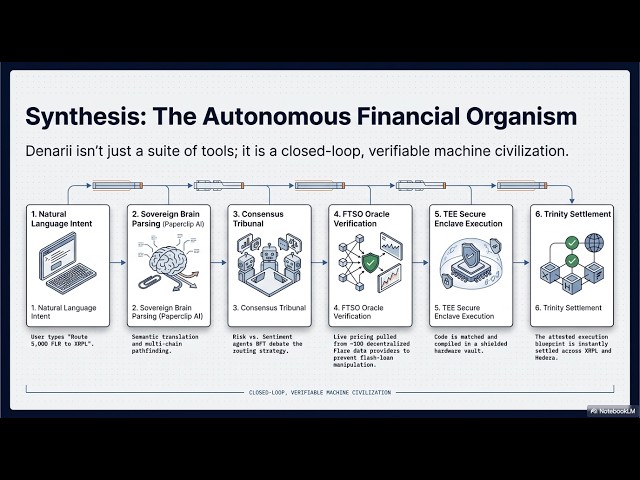 Denarii DFi - Xrpl Algo Hbar - Real World Assets
2026-06-04 01:10
Denarii DFi - Xrpl Algo Hbar - Real World Assets
2026-06-04 01:10
-
 Z1_Trader
2026-06-04 01:10
Z1_Trader
2026-06-04 01:10
-
 煲好剧
2026-06-04 01:10
煲好剧
2026-06-04 01:10
-
 煲好剧
2026-06-04 01:10
煲好剧
2026-06-04 01:10
-
 Ludo Roll
2026-06-04 01:10
Ludo Roll
2026-06-04 01:10
-
 Dogx | Mineração crypto
2026-06-04 00:35
Dogx | Mineração crypto
2026-06-04 00:35
-
 比特币啊超
2026-06-04 00:35
比特币啊超
2026-06-04 00:35
-
 TEFS
2026-06-04 00:35
TEFS
2026-06-04 00:35
-
 Kripto Detayı
2026-06-04 00:03
Kripto Detayı
2026-06-04 00:03
Рекомендуемые темы
-

- Деятельность китов Dogecoin
- Получите самую свежую информацию о деятельности китов Dogecoin с помощью нашего всестороннего анализа. Узнайте о тенденциях, закономерностях и влиянии этих китов на рынок Dogecoin. Будьте в курсе нашего экспертного анализа и будьте впереди в своем путешествии по криптовалюте.
-

- Майнинг Догекоин
- Майнинг Dogecoin — это процесс добавления новых блоков транзакций в блокчейн Dogecoin. Майнеры награждаются новыми Dogecoin за свою работу. В этой теме представлены статьи, связанные с майнингом Dogecoin, в том числе о том, как добывать Dogecoin, о лучшем оборудовании и программном обеспечении для майнинга, а также о прибыльности майнинга Dogecoin.
-
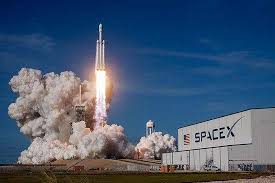
- Запуск космического корабля Spacex
- В этой теме представлены статьи, связанные с запусками космических кораблей SpaceX, включая даты запуска, детали миссии и статус запуска. Будьте в курсе последних запусков космических кораблей SpaceX с помощью этого информативного и всеобъемлющего ресурса.
-

- Король мемов: Dogecoin
- В этой теме представлены статьи, связанные с самыми популярными мемами, в том числе «Король мемов: Dogecoin». Memecoin стал доминирующим игроком в криптопространстве. Эти цифровые активы популярны по ряду причин. Они управляют самыми инновационными аспектами блокчейна.
Избранные статьи
Более>>- 1 北极Pablo硬币(APC):揭开地球的奥秘,一次预售
- 2 Dogecoin,Pepe和Shiba Inu的新高点在2025年,但这个加密货币可能会以10,000%的收益偷走该节目
- 3 唐纳德·特朗普总统宣布加密战略储备后,梅米硬币的道路起义(DUP)可以100倍
- 4 Dogecoin(Doge)价格预测:到2025年底,Meme硬币可以达到10美元吗?
- 5 卡达诺(Cardano)的查尔斯·霍斯金森(Charles Hoskinson)对比特币和狗狗币发表了一些著名的评论
- 6 云挖掘热潮:比特币,狗狗和对被动加密收入的追求
- 7 Grayscale、Dogecoin 和 ETF 首次亮相:Meme 币的新时代?
- 8 Rexas Finance(RXS)到2025年可能会激增10倍,超过Pepe(Pepe)
- 9 比特币交易员在Doge上赚了3000万美元,预测这笔0.0000002 AI代币的激增6,000% - 获得80%的奖金令牌
- 10 Dogecoin(Doge)价格预测:Meme Coin可能会升至0.27美元
Выберите валюту

US Dollar
USD

Chinese Yuan
CNY

Japanese Yen
JPY

South Korean Won
KRW

New Taiwan Dollar
TWD

Canadian Dollar
CAD

Euro
EUR

Pound Sterling
GBP

Danish Krone
DKK

Hong Kong Dollar
HKD

Australian Dollar
AUD

Brazilian Real
BRL

Swiss Franc
CHF

Chilean Peso
CLP

Czech Koruna KČ
CZK

Singapore Dollar
SGD

Indian Rupee
INR

Saudi Riyal
SAR

Vietnamese Dong
VND

Thai Baht
THB
Выберите валюту
-
US Dollar
USD-$

-
Chinese Yuan
CNY-¥
-
Japanese Yen
JPY-¥
-
South Korean Won
KRW -₩
-
New Taiwan Dollar
TWD-NT$
-
Canadian Dollar
CAD-$
-
Euro
EUR - €
-
Pound Sterling
GBP-£
-
Danish Krone
DKK-KR
-
Hong Kong Dollar
HKD- $
-
Australian Dollar
AUD-$
-
Brazilian Real
BRL -R$
-
Swiss Franc
CHF -FR
-
Chilean Peso
CLP-$
-
Czech Koruna KČ
CZK -KČ
-
Singapore Dollar
SGD-S$
-
Indian Rupee
INR -₹
-
Saudi Riyal
SAR -SAR
-
Vietnamese Dong
VND-₫
-
Thai Baht
THB -฿