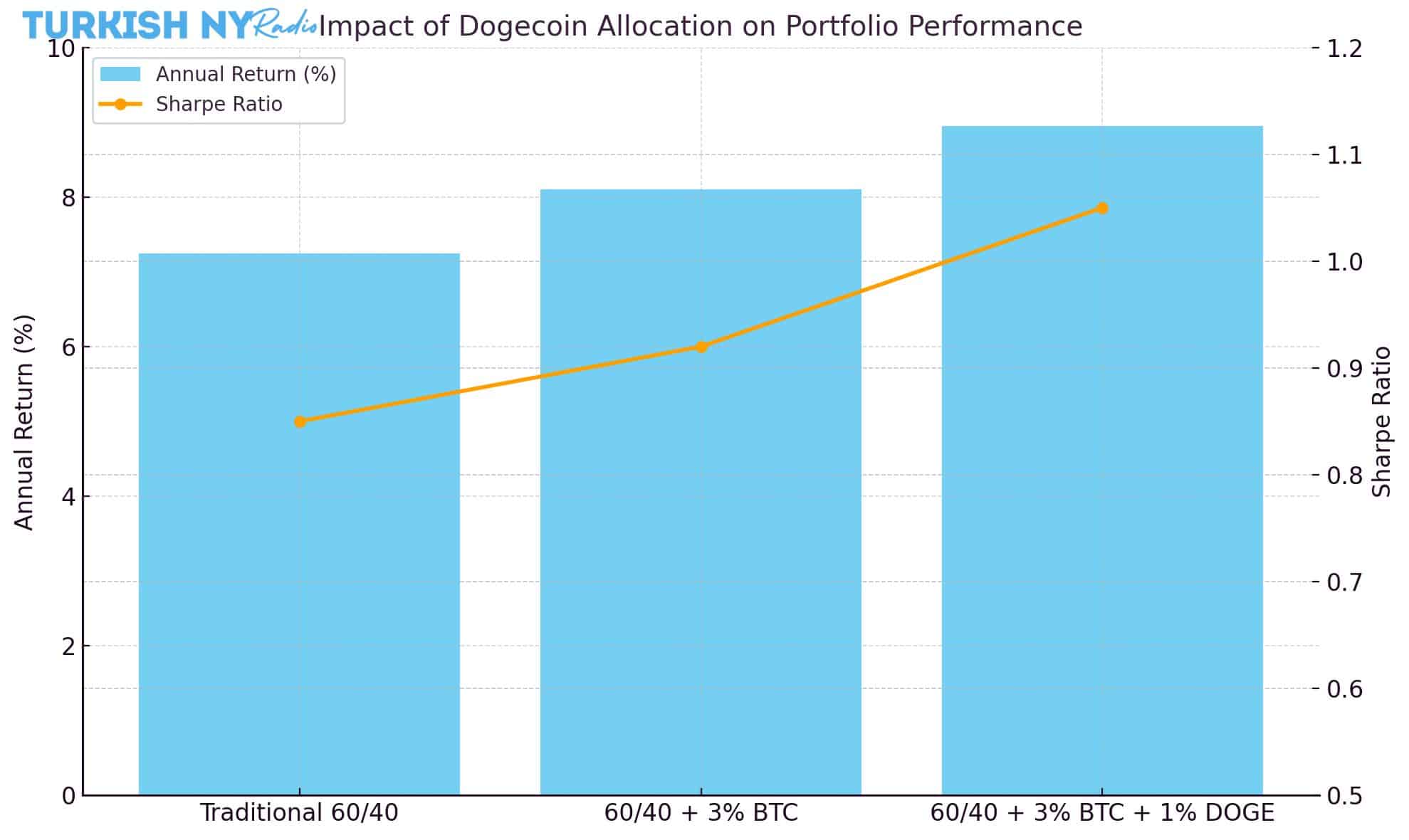
Dogecoin (DOGE), named after the popular Shiba Inu meme, experienced remarkable growth in 2021, exceeding 4,000% despite starting the year at less than $0.01. This surge transformed DOGE from a viral sensation into a significant asset. A 21Shares model simulation (April 2025) demonstrated that incorporating just 1% Dogecoin and 3% Bitcoin into a diversified portfolio yielded better risk-adjusted returns than a traditional portfolio. 
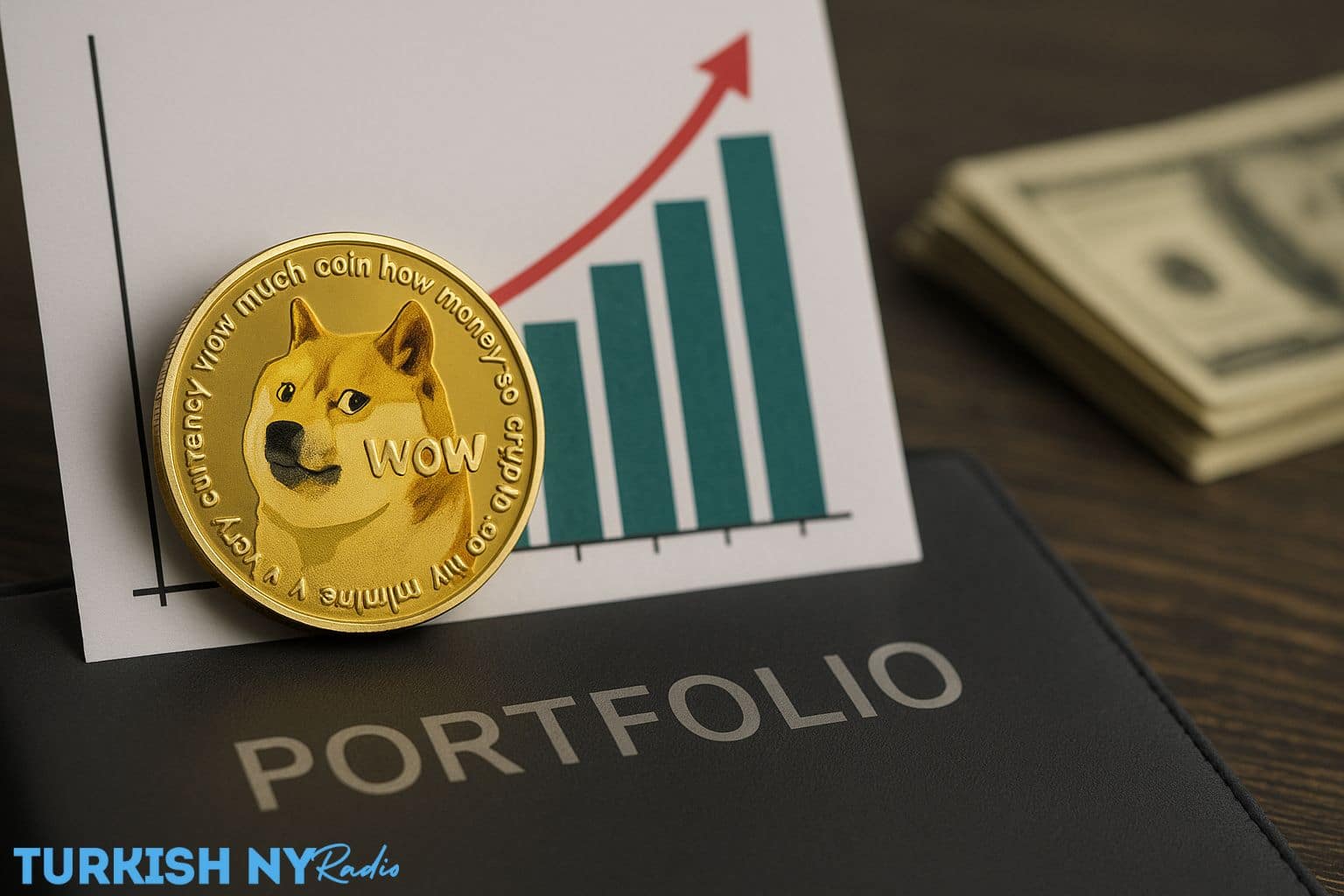
This analysis stress-tested portfolios combining traditional assets (stocks and bonds). A standard 60/40 stock-to-bond allocation returned an annualized 7.25%. However, adding a small crypto allocation (3% Bitcoin, 1% DOGE) increased the annualized return to 8.95%, improving the Sharpe ratio as well. This indicates that the strong returns were not accompanied by increased volatility. The slightly higher drawdown risk was considered acceptable, even under stressed market conditions.
Why Dogecoin Offers Strategic Value Beyond Speculation
21Shares advocates for including Dogecoin in investment portfolios due to its low correlation with traditional and other digital assets. This makes it a potential hedge against market instability, enhancing diversification.
Unlike Bitcoin and Ethereum, Dogecoin's price action is relatively independent, making it a more effective tool for diversified portfolio risk management. The report also emphasizes the importance of portfolio rebalancing (monthly or weekly) to prevent excessive exposure to any single asset, including DOGE, and mitigate the accumulation of risk that can negatively impact long-term returns. Regular rebalancing helps align portfolios with risk tolerance and maximize returns by capturing gains and limiting exposure to high-risk assets.
Dogecoin's increasing use as a medium of exchange further strengthens its investment case. Businesses like Tesla and AMC accept DOGE for payments, and projects like Dogebox and GigaWallet are improving its usability. Dogecoin's popularity is growing as a real-world investment, offering low transaction fees and fast transfer times beyond its meme origins.
Dogecoin's Potential Performance by 2025: Prediction Models
21Shares presented three scenarios for DOGE's potential performance, based on varying assumptions regarding market sentiment, total cryptocurrency market capitalization, and Dogecoin's dominance within the meme coin sector.
| Scenario | Assumptions | Estimated Price |
|---|---|---|
| Bear Case | 10% annual growth from 2021 ATH of $0.73 | ~$0.38 |
| Neutral Case | DOGE retains 3% share of a $5T total crypto market cap | ~$1.00 |
| Bull Case | Repeats prior cycle growth (189% CAGR from 2018-2022 bottom) | ~$1.42 |
In the bear case, DOGE reaches $0.38 by the end of 2025 without reaching a new all-time high. The neutral scenario assumes DOGE maintains a 3% market share, resulting in a $150 billion valuation and a price near $1. The bullish scenario, mirroring its previous growth cycle (from $0.007 to $0.0585), projects a price of $1.42, driven by increased retail demand, merchant adoption, and platform integrations (like X).
Real-World Use Cases Strengthen Dogecoin's Investment Thesis
Beyond its meme status, Dogecoin now possesses utility value, justifying its role as a store of value. Its speed and low cost make it suitable for tipping, donations, and small payments. Major companies (Tesla, AMC Theatres, Newegg) accept DOGE, and community-driven projects (Dogebox, GigaWallet) are expanding its infrastructure and appeal. This aligns with 21Shares' argument that Dogecoin is more than speculation; it's a diversification tool with low asset correlation and developing utility, moving beyond its internet meme origins.
Why Institutional Investors Are Monitoring Dogecoin
21Shares' analysis suggests that meme coins like Dogecoin can be valuable additions to structured portfolios when managed effectively. Even a small allocation (like 1% DOGE) offers potential upside with minimal risk. Unlike highly volatile altcoins, DOGE exhibits a different cyclical pattern, making it attractive to institutions seeking diversification rather than pure speculation. 21Shares found that frequent rebalancing can improve portfolio efficiency by incorporating Dogecoin. What began as a meme has evolved into an asset with genuine financial value.
Frequently Asked Questions
- How can 1% Dogecoin benefit my portfolio? Dogecoin's low correlation with other assets enhances diversification, increasing risk-adjusted returns without significantly impacting volatility or drawdown risk.
- Is adding Dogecoin to a conventional portfolio too risky? The risk is low when limited to 1% and frequently rebalanced, with returns enhanced by its uncorrelated price fluctuations and past growth.
- How often should I rebalance a Dogecoin portfolio? Experts recommend regular rebalancing (monthly, weekly, or another timeframe) to manage exposure, control risk, and maintain the desired risk-adjusted return.
- Can Dogecoin replace Bitcoin or other cryptocurrencies in portfolios? Dogecoin complements Bitcoin, not replaces it. Its unique price action further enhances diversification when added in small, carefully managed amounts.
Glossary of Key Terms
- Dogecoin (DOGE): A cryptocurrency launched in 2013, initially a parody of the Doge meme, now a widely used payment token.
- Portfolio Allocation: Distributing investment capital across various assets (stocks, bonds, crypto) to balance risk and reward.
- 60/40 Portfolio: A portfolio comprising 60% stocks and 40% bonds, aiming for growth with lower volatility and consistent income.
- Risk-Adjusted Return: A statistic considering the risk assumed to achieve a return; higher values indicate better risk-reward efficiency.
- Sharpe Ratio: Measures investment return relative to its risk; higher ratios indicate better risk-adjusted performance.
- Correlation: A statistical measure showing how two securities move in relation to each other; low correlation suggests different movements, aiding diversification.
- Rebalancing: Systematically returning a portfolio's assets to its target distribution, managing risk and locking in profits.
- Drawdown: The decline from a portfolio's peak value to its lowest point and subsequent recovery; smaller drawdowns indicate less negative market impact.
 Coinpaper
 Finance Feeds
 CryptoNewsLand
 Deythere
 36Crypto
 TurkishNY Radio
 Bitcoin Sistemi
 CoinoMedia
 Yellow News