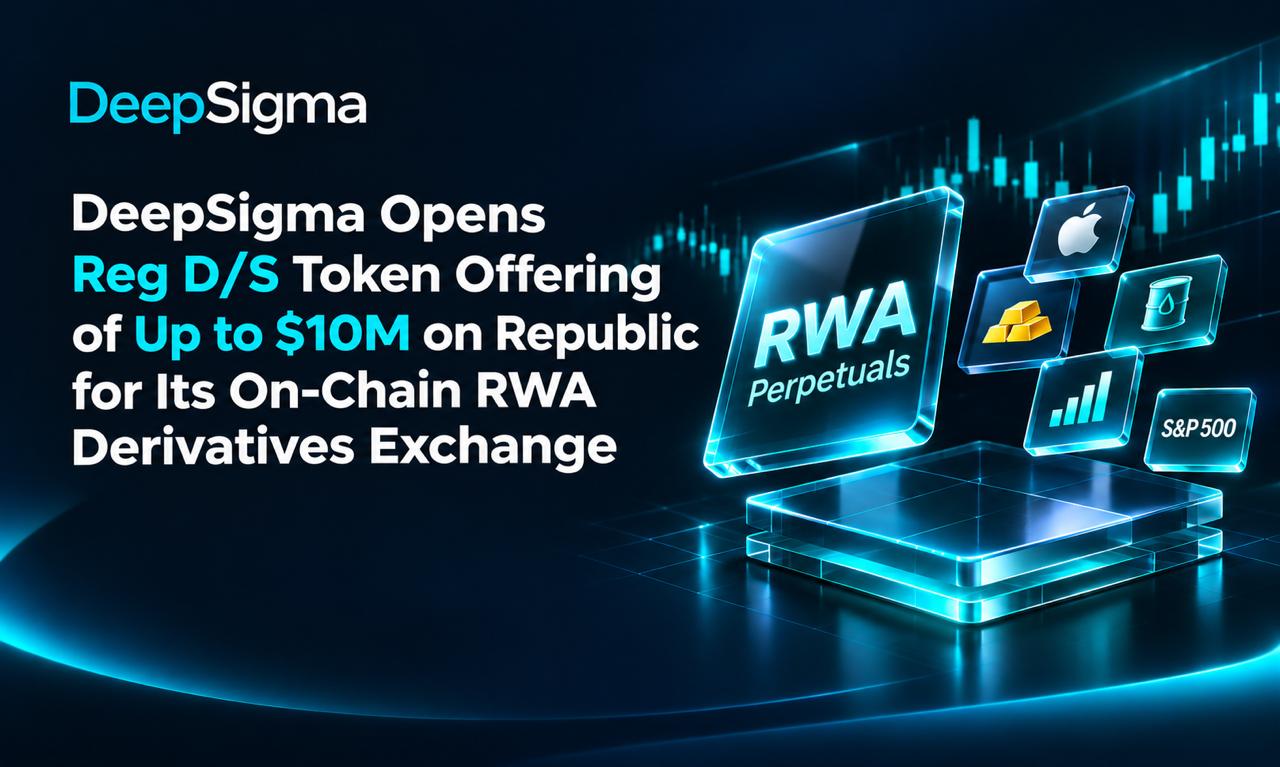
In a move set to redefine the financial landscape, DeepSigma is making waves by aiming to bridge the gap between traditional asset derivatives and the burgeoning world of on-chain technology. The company is currently embarking on a $10 million public token sale, hosted on Republic, with the ambitious goal of transforming its test environment into a live, regulated derivatives venue. This initiative promises to bring the 24/7 trading capabilities of cryptocurrencies to assets like oil and the S&P 500, all while operating under stringent regulatory guardrails.
Building Beyond the Demo: From Simulation to Live Markets
DeepSigma's current demo platform showcases its potential, offering users the chance to test trading strategies across 77 simulated markets. However, moving from a practice environment to a real-money trading floor presents significant challenges. DeepSigma is tackling this by developing a robust order-matching engine, a dedicated clearing layer for margin calls, and ensuring third-party code audits. The platform is being built on Cypherium, an enterprise Layer 1 network recognized for its hybrid consensus and patented technology. This infrastructure is crucial for DeepSigma to handle the complexities of traditional markets, such as weekend gaps and market holidays, which differ greatly from the continuous trading of crypto-native tokens.
Navigating Regulatory Waters and Token Lockups
The token sale's structure, with a 20% token release at the initial generation event and the remaining 80% unlocking over six months, signals a commitment to market stability and a departure from quick-dump schemes. Regulation remains a central focus, with DeepSigma leveraging Cypherium's decentralized identity framework to manage user verification and jurisdiction screening. While the platform operates under private placement exemptions and does not yet have explicit approval from the SEC or CFTC, this approach is a calculated step in navigating the evolving regulatory environment for tokenized derivatives. The long-term regulatory status of such instruments is an ongoing discussion, and DeepSigma's model is at the forefront of this debate.
The Future of On-Chain Derivatives
The concept of tokenizing real-world assets is gaining traction, but DeepSigma's focus on perpetual contracts linked to an active central limit order book is a rare and ambitious undertaking. The company aims to launch its mainnet approximately three months after the token sale concludes, a timeline that will test its ability to finalize the matching engine, secure the network, and onboard market makers. Successfully integrating decentralized derivatives for legacy assets requires not only regulatory compliance but also the sub-second execution speeds demanded by modern trading. As seen with the recent activity in on-chain perpetual futures for stocks like Nvidia (NVDA), where significant trading volume and price discovery occurred over weekends and outside traditional market hours, the demand for such continuous trading capabilities is evident. While specific instances like the NVDA trading on Hyperliquid highlight the potential for rapid price discovery and speculative activity, DeepSigma's approach aims to harness this on-chain innovation within a regulated framework for traditional assets. The success of DeepSigma will hinge on its ability to marry the speed and accessibility of blockchain with the stability and trust required for traditional finance.
So, whether you're a seasoned trader or just curious about the next big thing in finance, keep an eye on DeepSigma. It looks like Wall Street and crypto might just be learning to dance together, and it’s going to be a sight to behold!
 BH NEWS
 Coin Muhendisi
 IT Times
 Blockonomi
 CryptoTicker ENG
 Wendy
 Nathon Clark
 Optimisus
 COINTURK NEWS