Okay, here's a refined version of the article, focusing on readability and removing potential promotional language while keeping the core information intact and preserving the "" placeholder if it exists:
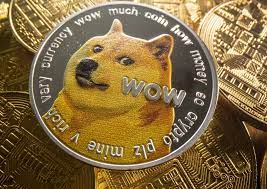
It was meant to be a joke. But like many jokes that resonate, it went further than its creators expected – and now it’s intent on conquering the crypto world. In 2013, Dogecoin emerged as a playful jab at the burgeoning cryptocurrency world with its Shiba Inu mascot and irreverent dogespeak: “wow, much coin.”
Yet, what began as a meme has evolved into a cultural and financial phenomenon, achieving a significant market capitalization and fostering a dynamic ecosystem. How did a memecoin, initially conceived as a parody of crypto, become a crypto cornerstone, inspiring numerous projects dedicated to establishing Doge as a prominent force within the memecoin market?
The answer lies in its inherent lightheartedness, strong community, and several innovative projects that recognized potential where others saw only fleeting amusement. This is the story of Dogecoin and its transformation into a crypto player with a presence in various onchain sectors. Much wow indeed.
Fun, Puns, and a Fair Launch
The origins of Dogecoin are well-documented. Conceived by Billy Markus and Jackson Palmer as a tongue-in-cheek response to rampant crypto speculation, Dogecoin launched on December 6, 2013, quickly attracting a dedicated community who embraced the humor and invested in the coin. A key characteristic of Doge is its ample supply, currently around 150 billion, with a circulating supply increasing by approximately 5 billion annually.
Despite the large supply, Doge has attracted hundreds of millions of investors, and the project's X account boasts a substantial following, exceeding that of many established cryptocurrencies. This popularity has garnered support from unexpected sources. Notably, Elon Musk, often referred to as the “Dogefather,” has played a role in driving the coin's price and even incorporated its name into initiatives focused on efficiency.
Beyond prominent endorsements, Doge offers practical advantages. Its low transaction fees make it suitable for micropayments and transferring crypto across exchanges and blockchain networks. Furthermore, it benefited from a fair launch, lacking insider allocations or pre-mine advantages. Every coin was mined using Proof-of-Work, similar to Bitcoin.
Meme culture and community engagement have propelled the project's growth, leading to the creation of numerous Dogecoin-inspired tokens. (It’s now standard practice for users of every new blockchain to launch a Doge-themed coin in homage to the OG and to kickstart network activity.) But beyond speculatively trading Doge and sharing memes, what exactly are you meant to do with the token?
This question has motivated blockchain developers to explore ways to leverage Doge's widespread network effects and transform it from a memecoin into a thriving ecosystem.
The Dog That Wouldn’t Die
Various attempts to evolve Doge have been explored, with mixed outcomes. However, in 2025, these endeavors are showing promise. Dogecoin is evolving beyond its initial meme status. Spearheading this development is DogeOS, an application layer developed by the creators of MyDoge wallet.
In May 2025, DogeOS received funding to expand Dogecoin's utility. Leveraging MyDoge's user base, DogeOS aims to provide the infrastructure for hosting games, DeFi applications, and AI-driven dapps anchored to the Dogecoin blockchain. This approach addresses the limitations of the Dogecoin network, which lacks native smart contract support, while preserving its security and network effects.
The roadmap for DogeOS includes supporting developers in creating onchain games, staking platforms, and dapps for lending and borrowing. This ambitious undertaking aims to elevate Dogecoin, but faces potential challenges. The success of DogeOS depends on adoption by the Doge community.
Previous efforts to expand the Doge brand have encountered obstacles. DogeOS, with financial backing and a clear vision, has a greater potential for success.
In many ways, adding a smart contract layer to Dogecoin mirrors attempts to enhance first-generation blockchains. While it remains to be seen whether DogeOS can achieve its goal of creating a hub for Doge-themed onchain activity, the technology and team are in place. And with MyDoge’s half a million users sure to be granted seamless onboarding, bootstrapping is also taken care of.
The onus is now on third-party developers to take the baton and run with it. Can Doge become the unit of account for serious activity – lending, gaming, and DeFAI – while retaining the irreverent humor and community spirit that elevated it into a $29B memecoin and top 10 crypto asset? This much can be said for certain: whatever Dogecoin started out as, it’s no longer a joke. It’s now suited, booted, and ready for business.
Disclaimer: This article is provided for informational purposes only. It is not offered or intended to be used as legal, tax, investment, financial, or other advice.
 AD HOC NEWS
 AD HOC NEWS
 Coinpaper
 Coinpaper
 Finance Feeds
 CryptoNewsLand
 Deythere
 36Crypto
 TurkishNY Radio