Digital Asset Investor ignited a spirited discussion this week after sharing a clip of macro investor Raoul Pal describing what he refers to as the “moron trade” – a common behavior among retail investors – and citing XRP as a key example. While the term is somewhat tongue-in-cheek, it illuminates a prevalent market phenomenon where investor psychology often overshadows fundamental analysis.
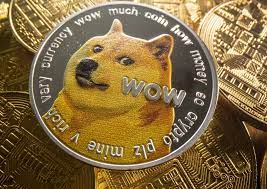
Pal explains that many newcomers to the crypto space are naturally drawn to the least expensive and most recognizable tokens within the top ten cryptocurrencies. He paints a familiar scenario: a first-time investor sees Bitcoin priced above $118,000 and Ethereum exceeding $4,000, leading them to conclude that these are "too expensive." Instead, they gravitate towards coins like XRP or Dogecoin, attracted by their lower per-unit cost and strong brand awareness.
Pal also drew a distinction between large, well-established Layer 1 networks like Solana and Sui – which are experiencing genuine adoption – and smaller, mid-tier DeFi projects that are more challenging to evaluate.
He emphasized that while some prominent Layer 1 networks can offer substantial returns with relatively lower risk, the "moron trade" is typically driven purely by price speculation. Importantly, Pal clarified that he wasn't labeling the assets themselves as "moronic," but rather describing a predictable pattern of retail investment.
The Psychology Behind the “Moron Trade”
Pal’s argument hinges on two key psychological factors: price anchoring and the affordance effect. New investors often believe that cheaper coins inherently possess greater upside potential simply because they can acquire a larger number of units for the same investment.
When such coins already benefit from brand recognition – such as XRP, Dogecoin, or Cardano – retail demand can significantly inflate prices during bull markets, irrespective of whether network usage or adoption metrics support such growth.
However, this type of rally can be fleeting if it lacks a foundation in solid fundamentals. Without sustained adoption, transaction growth, or active developer engagement, these assets are vulnerable to sharp corrections once the initial hype subsides.
Community Reaction
Digital Asset Investor’s post quickly gained traction, sparking a range of responses from amusement to criticism. Some members of the XRP community took offense at the "moron trade" label, asserting that the token's utility in facilitating cross-border payments lends it significantly more legitimacy than Pal suggested. Others interpreted the comment as confirmation that retail enthusiasm for low-priced tokens will continue to fuel gains in the next bull market.
A number of critics even speculated that Pal’s comments might stem from a lack of access to early venture capital allocations in XRP, a suggestion that gained considerable traction among XRP supporters.
The Real Takeaway for Investors
Regardless of whether Pal’s comments are perceived as an insult or an insightful observation, they underscore a crucial truth: in crypto markets, narrative and investor psychology frequently drive short-term price movements. Traders seeking to capitalize on these trends must employ robust risk management strategies, while long-term investors should prioritize measurable adoption metrics and strong underlying fundamentals.
By sharing the clip, Digital Asset Investor served as a reminder of a timeless reality: retail investor behavior can be both predictable and powerful, but without thorough research, it can also prove to be costly.
 Crypto Front News
 Coindoo
 CoinCryptoNews
 Coinlive.me
 Crypto Economy
 Coindoo.com
 Cointelegraph
 Crypto News Land
 BlockchainReporter