-
Price: $0.09465 0.1926%
-
Market Cap: 14.78B 0.5143%
-
Volume (24h): 832.05M 0%
-
Dominance: 0.5143% 0.5143%
-
Price: $0.09465 0.1926%

Networking Fundamentals #4 (Network Topologies)
Release: 2026/04/24 01:05 Reading: 0
Original author:Mindy
Original source:https://www.youtube.com/embed/6rJYHJGNt1s
*The Tension Between Layer 1 and Layer 2:* Mastering configurations starts with recognizing the constant tension between the physical hardware constraints of Layer 1 and the dynamic routing protocols operating at Layer 2. While cables are rigidly installed in a wall, the logical map dictates how data actually traverses that infrastructure. Grasping this distinction is foundational for tackling advanced troubleshooting scenarios on the CCNA. *Bus Topology Limitations:* In this legacy model, all devices attach linearly to a single central backbone cable, meaning they share the exact same physical medium. It relies heavily on the CSMA/CD protocol to manage traffic, where nodes must listen for a clear line before transmitting. Because of this shared setup, the mathematical probability of collisions rises exponentially as more devices are added, severely limiting scalable bandwidth. *Ring Topology and Token Passing:* Data in a ring travels in a single, unidirectional path using a highly controlled Layer 2 protocol called token passing. This provides deterministic access where collisions are virtually zero, because only the device currently holding the token is permitted to speak. However, a single physical cable break brings the entire network down unless an expensive secondary, redundant ring is deployed to self-heal the path. *Star Topology and Collision Domains:* The standard for modern local networks connects all independent nodes back to a central aggregation device. When that central device is a switch, it reads incoming packets and creates temporary, isolated point-to-point connections with the specific destination node. This eliminates shared collision domains entirely, allowing for simultaneous, full-duplex communication across the environment. *Mesh Architecture and Redundancy:* Mesh designs focus entirely on maximizing physical fault tolerance by establishing multiple independent pathways between nodes. A "full mesh" guarantees perfect resilience by connecting every single device to every other device, but the exponential cabling costs make it economically impossible at scale. Therefore, network engineers typically implement a "partial mesh" to prioritize redundant links strictly for mission-critical core routing hardware. *Spine-Leaf Architecture in Data Centers:* This highly structured partial mesh has become the absolute gold standard for enterprise data centers and global cloud computing environments. A massive array of server-facing "leaf" switches connects directly into a dense row of core "spine" switches. This exact layout guarantees that any virtual server can reach any other server on the network in exactly two predictable hops, optimizing both latency and reliability. *Software-Defined Networking (SDN):* SDN takes abstraction to its ultimate limit by entirely decoupling the logical control plane from the physical data-carrying hardware. Instead of manually configuring VLANs on specific switch ports, administrators can utilize intent-based routing where high-level business rules or secure AI integrations dynamically dictate traffic flow, an essential concept for modern CompTIA SecAI+ environments. This approach seamlessly integrates with advanced protocols like OSPF and BGP to self-optimize the topology in real time.
Recent news
MORE>>-
 Kolunite社区
2026-10-01 22:59
Kolunite社区
2026-10-01 22:59
-
 加密仲达—比特币行情分析
2026-10-01 22:59
加密仲达—比特币行情分析
2026-10-01 22:59
-
 中本笨- web3小白教程
2026-10-01 22:59
中本笨- web3小白教程
2026-10-01 22:59
-
 CakeBaBa
2026-10-01 22:59
CakeBaBa
2026-10-01 22:59
-
 Crypto City Tamil
2026-10-01 22:59
Crypto City Tamil
2026-10-01 22:59
-
 交易视界
2026-10-01 10:26
交易视界
2026-10-01 10:26
-
 Coin Market Insider
2026-10-01 10:26
Coin Market Insider
2026-10-01 10:26
-
 GoldSilver
2026-10-01 10:26
GoldSilver
2026-10-01 10:26
-
 StaRK Systems
2026-10-01 10:26
StaRK Systems
2026-10-01 10:26
Selected Topics
-

- Dogecoin whale activity
- Get the latest insights into Dogecoin whale activities with our comprehensive analysis. Discover trends, patterns, and the impact of these whales on the Dogecoin market. Stay informed with our expert analysis and stay ahead in your cryptocurrency journey.
-

- Dogecoin Mining
- Dogecoin mining is the process of adding new blocks of transactions to the Dogecoin blockchain. Miners are rewarded with new Dogecoin for their work. This topic provides articles related to Dogecoin mining, including how to mine Dogecoin, the best mining hardware and software, and the profitability of Dogecoin mining.
-
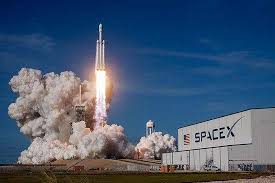
- Spacex Starship Launch
- This topic provides articles related to SpaceX Starship launches, including launch dates, mission details, and launch status. Stay up to date on the latest SpaceX Starship launches with this informative and comprehensive resource.
-

- King of Memes: Dogecoin
- This topic provides articles related to the most popular memes, including "The King of Memes: Dogecoin." Memecoin has become a dominant player in the crypto space. These digital assets are popular for a variety of reasons. They drive the most innovative aspects of blockchain.
Selected Articles
More>>- 1 Arctic Pablo Coin (APC): Uncovering Earth's Mysteries, One Presale at a Time
- 2 New Highs For Dogecoin, Pepe and Shiba Inu In 2025 But This Crypto May Steal The Show With 10,000% Gains
- 3 Meme Coin Doge Uprising (DUP) Could 100x After President Donald Trump Announces Crypto Strategic Reserve
- 4 Dogecoin (DOGE) Price Prediction: Could Meme Coin Hit $10 by the End of 2025?
- 5 Cardano's Charles Hoskinson Has Made Some Notable Remarks About Bitcoin and Dogecoin
- 6 Cloud Mining Craze: Bitcoin, Dogecoin, and the Quest for Passive Crypto Income
- 7 Grayscale, Dogecoin, and the ETF Debut: A New Era for Meme Coins?
- 8 Rexas Finance (RXS) Could Surge 10x by 2025, Outpacing Pepe (PEPE)
- 9 Bitcoin Trader Who Made $30 Million On DOGE Predicts 6,000% Surge For This $0.0000002 AI Token – Get 80% Bonus Tokens
- 10 Dogecoin (DOGE) Price Prediction: Meme Coin Could Rally To $0.27 As It Closes Above Pre-Halving Highs
Select Currency

US Dollar
USD

Chinese Yuan
CNY

Japanese Yen
JPY

South Korean Won
KRW

New Taiwan Dollar
TWD

Canadian Dollar
CAD

Euro
EUR

Pound Sterling
GBP

Danish Krone
DKK

Hong Kong Dollar
HKD

Australian Dollar
AUD

Brazilian Real
BRL

Swiss Franc
CHF

Chilean Peso
CLP

Czech Koruna KČ
CZK

Singapore Dollar
SGD

Indian Rupee
INR

Saudi Riyal
SAR

Vietnamese Dong
VND

Thai Baht
THB
Select Currency
-
US Dollar
USD-$

-
Chinese Yuan
CNY-¥
-
Japanese Yen
JPY-¥
-
South Korean Won
KRW -₩
-
New Taiwan Dollar
TWD-NT$
-
Canadian Dollar
CAD-$
-
Euro
EUR - €
-
Pound Sterling
GBP-£
-
Danish Krone
DKK-KR
-
Hong Kong Dollar
HKD- $
-
Australian Dollar
AUD-$
-
Brazilian Real
BRL -R$
-
Swiss Franc
CHF -FR
-
Chilean Peso
CLP-$
-
Czech Koruna KČ
CZK -KČ
-
Singapore Dollar
SGD-S$
-
Indian Rupee
INR -₹
-
Saudi Riyal
SAR -SAR
-
Vietnamese Dong
VND-₫
-
Thai Baht
THB -฿