-
Price: $0.05506 0.0571%
-
Market Cap: 8.64B 0.4153%
-
Volume (24h): 390.6M 0%
-
Dominance: 0.4153% 0.4153%
-
Price: $0.05506 0.0571%

Why Your Final Second Of Life Will Never End | Quantum Physics Documentary
Release: 2026/11/01 22:11 Reading: 0
Original author:Joe's Space Science
Original source:https://www.youtube.com/embed/jMIUn_9_xBs
🎧 Listen on Spotify → https://open.spotify.com/show/6PjZVgW2EACXTCpj8kPWbU This video examines quantum immortality, the many-worlds claim made precise by Max Tegmark in 1997 and tested here against general relativity, the Planck time, decoherence, and the Born rule, that your final second of life never ends. The idea holds that because an observer can only ever find themselves in a branch of reality where they survived, the last instant keeps subdividing — milliseconds, microseconds, thinner still — and never finishes from the inside. The documentary states this observer-survival argument at full strength, in the honest form its defenders give it, and then checks it piece by piece against what has actually been measured. It traces the reasoning from Max Tegmark's quantum gun and the quantum suicide thought experiment through Hugh Everett's relative-state formulation, Lev Vaidman's measure of existence, the physics of brain decoherence, the quantum Zeno effect, and David Eagleman's free-fall experiments on felt time. The repeated result is that a lucid observer pinned inside a stretching final second is contradicted by nearly every measurement available, from the collision times of a million sodium ions to the mortality curves of the oldest humans on record — while one narrow question, how the weight of a branch relates to first-person experience, stays genuinely unresolved. It is framed throughout as a testable physical claim, with every anomaly stated as unexplained physics rather than metaphysics. What's covered in this video: - How Max Tegmark's 1997 quantum gun reduces death to a single spin measurement — ket-up plus ket-down over root two — and why, under wavefunction collapse, survival odds fall as one-half to the n while the many-worlds reading says you only ever hear the click. - Why the many-worlds interpretation of Hugh Everett III and Bryce DeWitt carries both outcomes forward with no collapse, and how decoherence, introduced by H. Dieter Zeh in 1970 and sharpened by Wojciech Zurek's einselection, turns a branch into a measurable physical thing. - The three conditions Tegmark says a death must meet for the argument to apply — a genuine quantum trigger, death faster than awareness, and a clean binary kill — and why slow, real-world dying breaks the second one, with David Lewis, David Wallace, and Anthony Aguirre on consciousness that dims rather than switches off. - The measure problem at the core of the case: Lev Vaidman's measure of existence, Jacques Mallah's argument that total consciousness falls with each run, and Born-rule derivations by David Deutsch, Charles Sebens, and Sean Carroll showing the surviving branch weighs almost nothing. - Tegmark's 2000 Physical Review E calculation placing brain decoherence between 10^-13 and 10^-20 seconds, the Penrose–Hameroff Orch-OR microtubule challenge and Tegmark's reply, and why 37°C body warmth and the surviving branch are mutually exclusive. Mentioned in this video: observer survival, many-worlds interpretation, Hugh Everett III, Max Tegmark, quantum gun, Schrödinger equation, decoherence, H. Dieter Zeh, Wojciech Zurek, Born rule, Lev Vaidman, measure of existence, Jacques Mallah, David Deutsch, David Wallace, Sean Carroll, David Lewis, Nick Bostrom, Roger Penrose, Stuart Hameroff, Orch-OR, microtubules, quantum Zeno effect, anti-Zeno effect, NIST, Planck time, Margolus–Levitin bound, David Eagleman, near-death experiences, Greyson scale, Jimo Borjigin, Gompertz–Makeham law, Elisabetta Barbi, quantum mechanics. --- 0:00:00 The Second That Never Ends 0:02:38 Tegmark's Quantum Gun 0:14:34 Everett Deletes The Collapse 0:21:46 The Born Rule And Measure 0:32:05 Tegmark's Three Conditions 0:42:09 The Surviving Branch Weighs Nothing 0:58:40 Can A Brain Hold A Branch? 1:13:01 The Quantum Zeno Effect 1:20:34 Can Time Subdivide Forever? 1:25:42 Does Time Slow Before Death? 1:38:55 The Verdict, Piece By Piece 1:57:31 What One Life Actually Means
Recent news
MORE>>-
 kumis patiler
2026-11-23 06:22
-
 Ha Ms
2026-11-23 06:22
-
 CRYPTO_BEN
2026-11-23 06:22
-
 子敬.轮回珠宝
2026-11-23 06:22
-
 CryptoMetric
2026-11-23 06:22
-
 劇翻天 Drama Go
2026-11-22 16:36
-
 CryptoMason
2026-11-22 16:22
-
 Lý Tử Ly
2026-11-22 14:42
-
 Pidoku
2026-11-22 14:15
Selected Topics
-
- Dogecoin whale activity
- Get the latest insights into Dogecoin whale activities with our comprehensive analysis. Discover trends, patterns, and the impact of these whales on the Dogecoin market. Stay informed with our expert analysis and stay ahead in your cryptocurrency journey.
-

- Dogecoin Mining
- Dogecoin mining is the process of adding new blocks of transactions to the Dogecoin blockchain. Miners are rewarded with new Dogecoin for their work. This topic provides articles related to Dogecoin mining, including how to mine Dogecoin, the best mining hardware and software, and the profitability of Dogecoin mining.
-
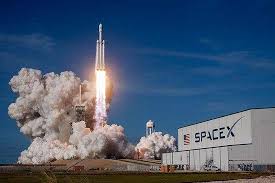
- Spacex Starship Launch
- This topic provides articles related to SpaceX Starship launches, including launch dates, mission details, and launch status. Stay up to date on the latest SpaceX Starship launches with this informative and comprehensive resource.
-
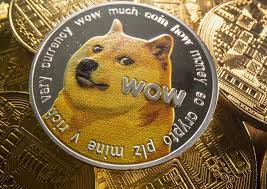
- King of Memes: Dogecoin
- This topic provides articles related to the most popular memes, including "The King of Memes: Dogecoin." Memecoin has become a dominant player in the crypto space. These digital assets are popular for a variety of reasons. They drive the most innovative aspects of blockchain.
Selected Articles
More>>- 1 Arctic Pablo Coin (APC): Uncovering Earth's Mysteries, One Presale at a Time
- 2 New Highs For Dogecoin, Pepe and Shiba Inu In 2025 But This Crypto May Steal The Show With 10,000% Gains
- 3 Meme Coin Doge Uprising (DUP) Could 100x After President Donald Trump Announces Crypto Strategic Reserve
- 4 Dogecoin (DOGE) Price Prediction: Could Meme Coin Hit $10 by the End of 2025?
- 5 Cardano's Charles Hoskinson Has Made Some Notable Remarks About Bitcoin and Dogecoin
- 6 Cloud Mining Craze: Bitcoin, Dogecoin, and the Quest for Passive Crypto Income
- 7 Grayscale, Dogecoin, and the ETF Debut: A New Era for Meme Coins?
- 8 Rexas Finance (RXS) Could Surge 10x by 2025, Outpacing Pepe (PEPE)
- 9 Bitcoin Trader Who Made $30 Million On DOGE Predicts 6,000% Surge For This $0.0000002 AI Token – Get 80% Bonus Tokens
- 10 Dogecoin (DOGE) Price Prediction: Meme Coin Could Rally To $0.27 As It Closes Above Pre-Halving Highs
Select Currency

US Dollar
USD

Chinese Yuan
CNY

Japanese Yen
JPY

South Korean Won
KRW

New Taiwan Dollar
TWD

Canadian Dollar
CAD

Euro
EUR

Pound Sterling
GBP

Danish Krone
DKK

Hong Kong Dollar
HKD

Australian Dollar
AUD

Brazilian Real
BRL

Swiss Franc
CHF

Chilean Peso
CLP

Czech Koruna KČ
CZK

Singapore Dollar
SGD

Indian Rupee
INR

Saudi Riyal
SAR

Vietnamese Dong
VND

Thai Baht
THB
Select Currency
-
US Dollar
USD-$

-
Chinese Yuan
CNY-¥
-
Japanese Yen
JPY-¥
-
South Korean Won
KRW -₩
-
New Taiwan Dollar
TWD-NT$
-
Canadian Dollar
CAD-$
-
Euro
EUR - €
-
Pound Sterling
GBP-£
-
Danish Krone
DKK-KR
-
Hong Kong Dollar
HKD- $
-
Australian Dollar
AUD-$
-
Brazilian Real
BRL -R$
-
Swiss Franc
CHF -FR
-
Chilean Peso
CLP-$
-
Czech Koruna KČ
CZK -KČ
-
Singapore Dollar
SGD-S$
-
Indian Rupee
INR -₹
-
Saudi Riyal
SAR -SAR
-
Vietnamese Dong
VND-₫
-
Thai Baht
THB -฿