-
Price: $0.09316 -2.1952%
-
Market Cap: 14.55B 0.5039%
-
Volume (24h): 866.87M 0%
-
Dominance: 0.5039% 0.5039%
-
Price: $0.09316 -2.1952%

Standard Chartered suddenly calls for long Ethereum: What’s the secret behind the $40,000 target price?
Release: 2026/04/05 09:00 Reading: 0
Original author:币需大白话
Original source:https://www.youtube.com/embed/uzPsrgQlPTw
Focusing on the core event of Standard Chartered Bank raising the long-term target price of Ethereum to US$40,000, this article conducts a comprehensive analysis of Ethereum’s current structural opportunities and potential risks from the perspective of institutional analysis logic, changes in the supply side of the primary market, whale movements in the secondary market, dual narratives of fundamentals, and investment strategies. Geoffrey, Head of FX and Digital Asset Research, Standard Chartered Bank Kendrick defined 2026 as the "Year of Ethereum". Although the short-term target price was lowered several times in early 2026 due to overall market weakness (from $12,000 to $7,500 to $4,000), the long-term target of $40,000 in 2030 has remained unchanged, corresponding to a potential increase of approximately 20 times, while the Bitcoin target price of $500,000 during the same period corresponds to an increase of approximately 7.5 times. Standard Chartered's bullish logic is rooted in Ethereum's structural dominance in three major tracks: first, the stablecoin settlement layer, Ethereum accounts for about 58% of the stablecoin market value, and traditional payment giants such as Visa have begun to use the Ethereum ecosystem for USDC settlement; secondly, tokenized real world assets (RWA), Ethereum accounts for about 65.5%. Market share, the total locked-up value is approximately US$12.5 billion. As asset management giants such as BlackRock move fund products onto the chain, the RWA tokenization market is expected to reach US$300 billion in 2026. Third, decentralized finance (DeFi), the total locked-up value of DeFi on the Ethereum chain has exceeded US$300 billion, accounting for approximately 57% of the entire network. At the same time, there has been a strategic turn on the supply side of the primary market: the Ethereum Foundation increased its pledged ETH holdings to approximately 46,667 pieces (approximately US$96.6 million) on April 3, 2026, gradually approaching the default of 70,000 pieces. Regarding the pledge target, the on-chain monitoring agency Arkham clearly stated that "the Ethereum Foundation has stopped selling ETH and started staking", which means that the foundation will rely on pledge proceeds to maintain operations, thus significantly reducing the selling pressure from the official secondary market. In the secondary market, Bitmine, a company associated with well-known analyst Tom Lee, once again increased its holdings of 40,000 ETH through institutional broker FalconX, with a total value of approximately US$82.07 million. The company had previously made multiple large-scale purchases in December 2025 and February 2026. The total amount of ETH in its vault has been close to 4 million, worth more than US$11 billion, and it aims to control approximately 5% of the circulating supply of ETH. On-chain data also shows that exchange ETH reserves continue to decline, while the number of addresses holding more than 10,000 ETH increases, indicating that long-term chips are quietly concentrated. However, investors also need to face multiple risks: prediction market Polymarket data shows that the possibility of Ethereum losing its status as the world's second largest cryptocurrency in 2026 has soared from 17% to more than 59%, mainly driven by the rapid growth in the market value of the two major stablecoins USDT and USDC; new generations such as Solana and Sui Layer1 blockchains continue to compete in terms of transaction speed and user experience, diverting some developers and users; although the Ethereum L2 solution solves the scalability problem, it also causes some value and users to migrate from the main chain to networks such as Arbitrum, Optimism and Base, of which Base has occupied all L2 46% of DeFi TVL; in addition, the U.S. SEC’s regulatory attitude toward DeFi protocols, global regulatory fragmentation, and the macroeconomic environment (Federal Reserve monetary policy, geopolitical risks) all pose uncertainties. From an investment strategy perspective, Standard Chartered's US$40,000 target should be viewed as a long-term narrative framework rather than a short-term trading signal. Investors can consider building positions in batches, participating in pledges to obtain an annualized rate of return of approximately 3% to 4% plus network fee sharing, and maintain continued attention to the competitive landscape. Overall, Ethereum’s structural moat in the stablecoin, RWA and DeFi fields combined with the continued inflow of institutional funds and the contraction of the supply side have formed a core logic of long-term bullishness. However, short-term prices are still affected by macro sentiment and competitive pressure, and investors should make allocation decisions based on a rational assessment of the risk-return ratio.
Recent news
MORE>>-
 DiDi Chanel
2026-10-03 23:35
DiDi Chanel
2026-10-03 23:35
-
 Crypto Billions
2026-10-03 23:35
Crypto Billions
2026-10-03 23:35
-
 逆天剧场
2026-10-03 23:35
逆天剧场
2026-10-03 23:35
-
 Nanda Cryptohub
2026-10-03 23:35
Nanda Cryptohub
2026-10-03 23:35
-
 Las Vegas COIN HUNTER
2026-10-03 23:35
Las Vegas COIN HUNTER
2026-10-03 23:35
-
 mohali property search
2026-10-03 18:57
mohali property search
2026-10-03 18:57
-
 星星AI剧
2026-10-03 17:35
星星AI剧
2026-10-03 17:35
-
 Les Rois du Bitcoin
2026-10-03 15:56
Les Rois du Bitcoin
2026-10-03 15:56
-
 Migas Films
2026-10-03 15:36
Migas Films
2026-10-03 15:36
Selected Topics
-

- Dogecoin whale activity
- Get the latest insights into Dogecoin whale activities with our comprehensive analysis. Discover trends, patterns, and the impact of these whales on the Dogecoin market. Stay informed with our expert analysis and stay ahead in your cryptocurrency journey.
-

- Dogecoin Mining
- Dogecoin mining is the process of adding new blocks of transactions to the Dogecoin blockchain. Miners are rewarded with new Dogecoin for their work. This topic provides articles related to Dogecoin mining, including how to mine Dogecoin, the best mining hardware and software, and the profitability of Dogecoin mining.
-
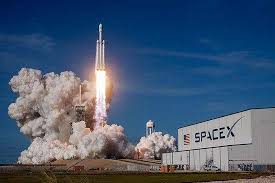
- Spacex Starship Launch
- This topic provides articles related to SpaceX Starship launches, including launch dates, mission details, and launch status. Stay up to date on the latest SpaceX Starship launches with this informative and comprehensive resource.
-

- King of Memes: Dogecoin
- This topic provides articles related to the most popular memes, including "The King of Memes: Dogecoin." Memecoin has become a dominant player in the crypto space. These digital assets are popular for a variety of reasons. They drive the most innovative aspects of blockchain.
Selected Articles
More>>- 1 Arctic Pablo Coin (APC): Uncovering Earth's Mysteries, One Presale at a Time
- 2 New Highs For Dogecoin, Pepe and Shiba Inu In 2025 But This Crypto May Steal The Show With 10,000% Gains
- 3 Meme Coin Doge Uprising (DUP) Could 100x After President Donald Trump Announces Crypto Strategic Reserve
- 4 Dogecoin (DOGE) Price Prediction: Could Meme Coin Hit $10 by the End of 2025?
- 5 Cardano's Charles Hoskinson Has Made Some Notable Remarks About Bitcoin and Dogecoin
- 6 Cloud Mining Craze: Bitcoin, Dogecoin, and the Quest for Passive Crypto Income
- 7 Grayscale, Dogecoin, and the ETF Debut: A New Era for Meme Coins?
- 8 Rexas Finance (RXS) Could Surge 10x by 2025, Outpacing Pepe (PEPE)
- 9 Bitcoin Trader Who Made $30 Million On DOGE Predicts 6,000% Surge For This $0.0000002 AI Token – Get 80% Bonus Tokens
- 10 Dogecoin (DOGE) Price Prediction: Meme Coin Could Rally To $0.27 As It Closes Above Pre-Halving Highs
Select Currency

US Dollar
USD

Chinese Yuan
CNY

Japanese Yen
JPY

South Korean Won
KRW

New Taiwan Dollar
TWD

Canadian Dollar
CAD

Euro
EUR

Pound Sterling
GBP

Danish Krone
DKK

Hong Kong Dollar
HKD

Australian Dollar
AUD

Brazilian Real
BRL

Swiss Franc
CHF

Chilean Peso
CLP

Czech Koruna KČ
CZK

Singapore Dollar
SGD

Indian Rupee
INR

Saudi Riyal
SAR

Vietnamese Dong
VND

Thai Baht
THB
Select Currency
-
US Dollar
USD-$

-
Chinese Yuan
CNY-¥
-
Japanese Yen
JPY-¥
-
South Korean Won
KRW -₩
-
New Taiwan Dollar
TWD-NT$
-
Canadian Dollar
CAD-$
-
Euro
EUR - €
-
Pound Sterling
GBP-£
-
Danish Krone
DKK-KR
-
Hong Kong Dollar
HKD- $
-
Australian Dollar
AUD-$
-
Brazilian Real
BRL -R$
-
Swiss Franc
CHF -FR
-
Chilean Peso
CLP-$
-
Czech Koruna KČ
CZK -KČ
-
Singapore Dollar
SGD-S$
-
Indian Rupee
INR -₹
-
Saudi Riyal
SAR -SAR
-
Vietnamese Dong
VND-₫
-
Thai Baht
THB -฿