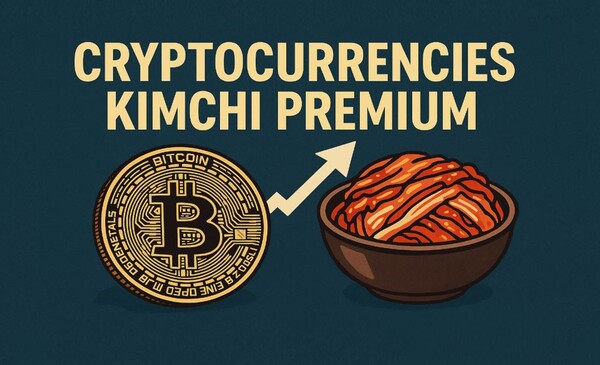
New York, NY – The dynamic world of cryptocurrency is always full of surprises, and South Korea, a recognized hotspot for digital asset activity, is currently serving up a particularly intriguing dish: a consistent 'reverse kimchi premium' for Bitcoin. As of August 23, Bitcoin (BTC) was trading at a noticeable discount on South Korean exchanges compared to global prices, a stark contrast to the historical 'kimchi premium' where local prices often surged higher.
On August 23, BTC on South Korea's Upbit exchange was priced at 105.56 million KRW, while on global exchange Binance, it was 106.89 million KRW, reflecting a negative price gap of 1.33 million KRW and a reverse kimchi premium of -1.25%. This trend wasn't isolated to Bitcoin; Ethereum (ETH) saw a -1.21% reverse premium, and other major altcoins like Solana (SOL), XRP, Dogecoin (DOGE), and Sui (SUI) also traded at discounts ranging from -0.8% to -1.2%.
The Plot Thickens: Beyond the Daily Discount
This persistent reverse premium, a shift from the usual narrative, coincides with a broader, more profound transformation in South Korea's crypto landscape. Andrew Park, CEO of FactBlock and organizer of Korea Blockchain Week, highlighted a significant move from a retail-driven market to one increasingly influenced by institutional participation. This isn't just a ripple; it's a wave of regulatory and legislative changes poised to redefine how digital assets are traded and managed in one Korea.
South Korean financial authorities are actively considering allowing corporate virtual asset accounts for approximately 3,500 listed companies and professional investors. Imagine the influx of capital and stability this could bring! The National Assembly is also busy integrating tokenized assets and security tokens into the existing financial regulatory framework, with revisions to key acts to provide much-needed legal clarity.
Project Hangang and the Future of Digital Won
Adding another layer to this evolving story is the Bank of Korea's Project Hangang, its central bank digital currency (CBDC) initiative. Having completed its first testing phase, the central bank plans to launch a second phase aimed at institutional participants by the end of 2026. This careful, phased approach signals a steady march towards broader digital currency adoption, potentially working hand-in-hand with private sector innovation.
For the average Joe and Jane, this institutional shift could mean a more regulated and secure environment, though perhaps with fewer of those wild, speculative swings. For the broader financial world, integrating digital assets into traditional frameworks could boost credibility and attract global investment. It's a balancing act between fostering innovation and ensuring robust oversight.
My Two Cents: A Maturing Market?
It seems to me that the reverse kimchi premium, while a fascinating daily data point, might be a symptom of a market in transition. As South Korea moves towards a more institutionally anchored digital finance ecosystem, the inefficiencies that once created significant premiums or discounts due to retail frenzy might be smoothing out. The increasing regulatory clarity and the entry of more sophisticated players could be leading to a more rational, globally aligned pricing structure. It’s a sign of a market growing up, shedding some of its speculative youth for a more mature, integrated future.
The Takeaway
South Korea’s crypto market is at a pivotal juncture. The persistent reverse kimchi premium, far from being just a quirky market anomaly, appears to be intertwined with the country's broader push towards institutional adoption and regulatory sophistication. So, while Bitcoin might be on sale in Seoul today, the underlying narrative is about a market evolving, maturing, and preparing for a future where digital assets are deeply woven into the financial fabric. It's a fascinating watch, and honestly, who doesn't love a good discount?
 36crypto
 Cointribune EN
 Coingabbar
 IT Times
 Coinpaper.com
 Coingabbar
 DT News
 ETHNews
 36crypto