-
Price: $0.08185 3.9298%
-
Market Cap: 14.09B 0.5063%
-
Volume (24h): 561.45M 0%
-
Dominance: 0.5063% 0.5063%
-
Price: $0.08185 3.9298%

Microsoft, Google, Goldman Sachs and 16 other companies collectively said no! OKXICE hard push, Nasdaq withdraws: the first battle of tokenized stocks
Release: 2026/10/21 13:09 Reading: 0
Original author:WEB3AI
Original source:https://www.youtube.com/embed/LfE_J-D3mWY
If you thought stock tokenization was just a concept being played around by the crypto community, what happens in October 2026 may make you think again. OKXICE is a 50/50 joint venture platform owned by Intercontinental Exchange, the parent company of the New York Stock Exchange. TSV, under the SEC innovation exemption framework, is preparing to turn a batch of U.S. stocks into on-chain tokens for 24/7 trading. As a result, an update notice on October 19 showed that the number of U.S. listed companies that objected to their stocks being tokenized trading increased from 9 to 16. Microsoft, Google parent company Alphabet, Goldman Sachs, Qualcomm, Caterpillar, McDonald's, and Western Digital have all joined the list. Companies such as Broadcom, Verizon, UnitedHealth, and CoreWeave have already raised objections. OKX-ICE co-chairman and former New York Governor Cuomo said this was a "very natural reaction" because the system inherently allows companies to choose to join or exit. The SEC's exemption sets a cap on the number of participants and transaction volume, which is essentially a sandbox experiment. But what’s really interesting about this is not that the 16 companies said “no,” but what they were objecting to. Applied Optoelectronics is one of the few companies that has publicly given its reasons. It said it is not sure about the impact of tokenization on stock prices, liquidity and volatility, and is also worried that investors will regard tokens issued by third parties as products endorsed by the company itself. Behind this is a deeper issue than "agreeing to go on-chain": the legal essence of tokenized stocks, is it a record of ownership of real stocks, a contractual claim against the custodian, or just a layer of price exposure. Galaxy’s head of research pointed out after the introduction of the SEC’s new regulations that packaged securities that only provide price exposure do not qualify for exemptions, and Robinhood’s early products are legally tokenized debt securities and do not confer legal or beneficial ownership of the underlying company. At the same time, although Nasdaq does not appear on the list of these 16 companies, it clearly removed its stocks from the TSV track as early as September 29 in the issuer guidance. The reason is very specific: it does not want its stocks to be traded in a venue that does not display the best price in real time and does not report transactions to the consolidated market band. The transaction in the tokenized venue is delayed by ten minutes and is not subject to Regulation NMS, which may form a "shadow market" with disjointed pricing. The IMF also gave data in its October report: more than half of tokenized stock transactions occurred outside the regular hours of the U.S. stock market, about 80% of the transaction size was less than one share, the realized volatility was about 1.5 times that of the traditional market, and the liquidity was significantly lower. But on the other hand, data from DWF Labs shows that the total market value of tokenized stocks reached US$3.8 billion in early October, an increase of 483% from US$654 million at the beginning of the year. The weekly DEX spot trading volume climbed from US$45.8 million to US$2.54 billion. On-chain use is indeed growing. So this is not a story about "traditional finance does not understand new technologies", but a stress test about who defines stocks as a legal and governance tool in an on-chain environment. The SEC has set the upper limit on the on-chain trading volume of a single security at 0.25% of the average daily trading volume, indicating that the regulators themselves understand that the purpose of the sandbox is to allow the mechanism to expose problems under controllable conditions, rather than to allow a high-volatility, thin-liquidity market to gain enough volume to feed back to the traditional market at an early stage. For ordinary investors, the most practical inspiration is: when you buy a token linked to the price of a certain stock on the chain, what exactly are you buying, does it have voting rights, how are dividends transmitted, and what bankruptcy isolation rules are subject to the issuer? These questions are usually answered by default in the backend of traditional brokerage accounts, but in a tokenized environment they need to be proactively asked.
Recent news
MORE>>-
 TEKI English
2026-10-21 17:20
-
 WEB3AI
2026-10-21 17:20
-
 Chart Hackers
2026-10-21 17:20
-
 MightyCrypto
2026-10-21 17:20
-
 We Make Trillioner
2026-10-21 17:20
-
 BitTalk社区丨BTC
2026-10-21 16:57
-
 Crazy XYZ Entertainers
2026-10-21 16:18
-
 Native English With Mina
2026-10-21 15:20
-
 绀香BTC合约计划
2026-10-21 15:20
Selected Topics
-

- Dogecoin whale activity
- Get the latest insights into Dogecoin whale activities with our comprehensive analysis. Discover trends, patterns, and the impact of these whales on the Dogecoin market. Stay informed with our expert analysis and stay ahead in your cryptocurrency journey.
-

- Dogecoin Mining
- Dogecoin mining is the process of adding new blocks of transactions to the Dogecoin blockchain. Miners are rewarded with new Dogecoin for their work. This topic provides articles related to Dogecoin mining, including how to mine Dogecoin, the best mining hardware and software, and the profitability of Dogecoin mining.
-

- Spacex Starship Launch
- This topic provides articles related to SpaceX Starship launches, including launch dates, mission details, and launch status. Stay up to date on the latest SpaceX Starship launches with this informative and comprehensive resource.
-
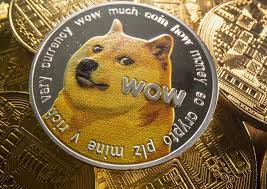
- King of Memes: Dogecoin
- This topic provides articles related to the most popular memes, including "The King of Memes: Dogecoin." Memecoin has become a dominant player in the crypto space. These digital assets are popular for a variety of reasons. They drive the most innovative aspects of blockchain.
Selected Articles
More>>- 1 Arctic Pablo Coin (APC): Uncovering Earth's Mysteries, One Presale at a Time
- 2 New Highs For Dogecoin, Pepe and Shiba Inu In 2025 But This Crypto May Steal The Show With 10,000% Gains
- 3 Meme Coin Doge Uprising (DUP) Could 100x After President Donald Trump Announces Crypto Strategic Reserve
- 4 Dogecoin (DOGE) Price Prediction: Could Meme Coin Hit $10 by the End of 2025?
- 5 Cardano's Charles Hoskinson Has Made Some Notable Remarks About Bitcoin and Dogecoin
- 6 Cloud Mining Craze: Bitcoin, Dogecoin, and the Quest for Passive Crypto Income
- 7 Grayscale, Dogecoin, and the ETF Debut: A New Era for Meme Coins?
- 8 Rexas Finance (RXS) Could Surge 10x by 2025, Outpacing Pepe (PEPE)
- 9 Bitcoin Trader Who Made $30 Million On DOGE Predicts 6,000% Surge For This $0.0000002 AI Token – Get 80% Bonus Tokens
- 10 Dogecoin (DOGE) Price Prediction: Meme Coin Could Rally To $0.27 As It Closes Above Pre-Halving Highs
Select Currency

US Dollar
USD

Chinese Yuan
CNY

Japanese Yen
JPY

South Korean Won
KRW

New Taiwan Dollar
TWD

Canadian Dollar
CAD

Euro
EUR

Pound Sterling
GBP

Danish Krone
DKK

Hong Kong Dollar
HKD

Australian Dollar
AUD

Brazilian Real
BRL

Swiss Franc
CHF

Chilean Peso
CLP

Czech Koruna KČ
CZK

Singapore Dollar
SGD

Indian Rupee
INR

Saudi Riyal
SAR
Vietnamese Dong
VND

Thai Baht
THB
Select Currency
-
US Dollar
USD-$

-
Chinese Yuan
CNY-¥
-
Japanese Yen
JPY-¥
-
South Korean Won
KRW -₩
-
New Taiwan Dollar
TWD-NT$
-
Canadian Dollar
CAD-$
-
Euro
EUR - €
-
Pound Sterling
GBP-£
-
Danish Krone
DKK-KR
-
Hong Kong Dollar
HKD- $
-
Australian Dollar
AUD-$
-
Brazilian Real
BRL -R$
-
Swiss Franc
CHF -FR
-
Chilean Peso
CLP-$
-
Czech Koruna KČ
CZK -KČ
-
Singapore Dollar
SGD-S$
-
Indian Rupee
INR -₹
-
Saudi Riyal
SAR -SAR
-
Vietnamese Dong
VND-₫
-
Thai Baht
THB -฿